
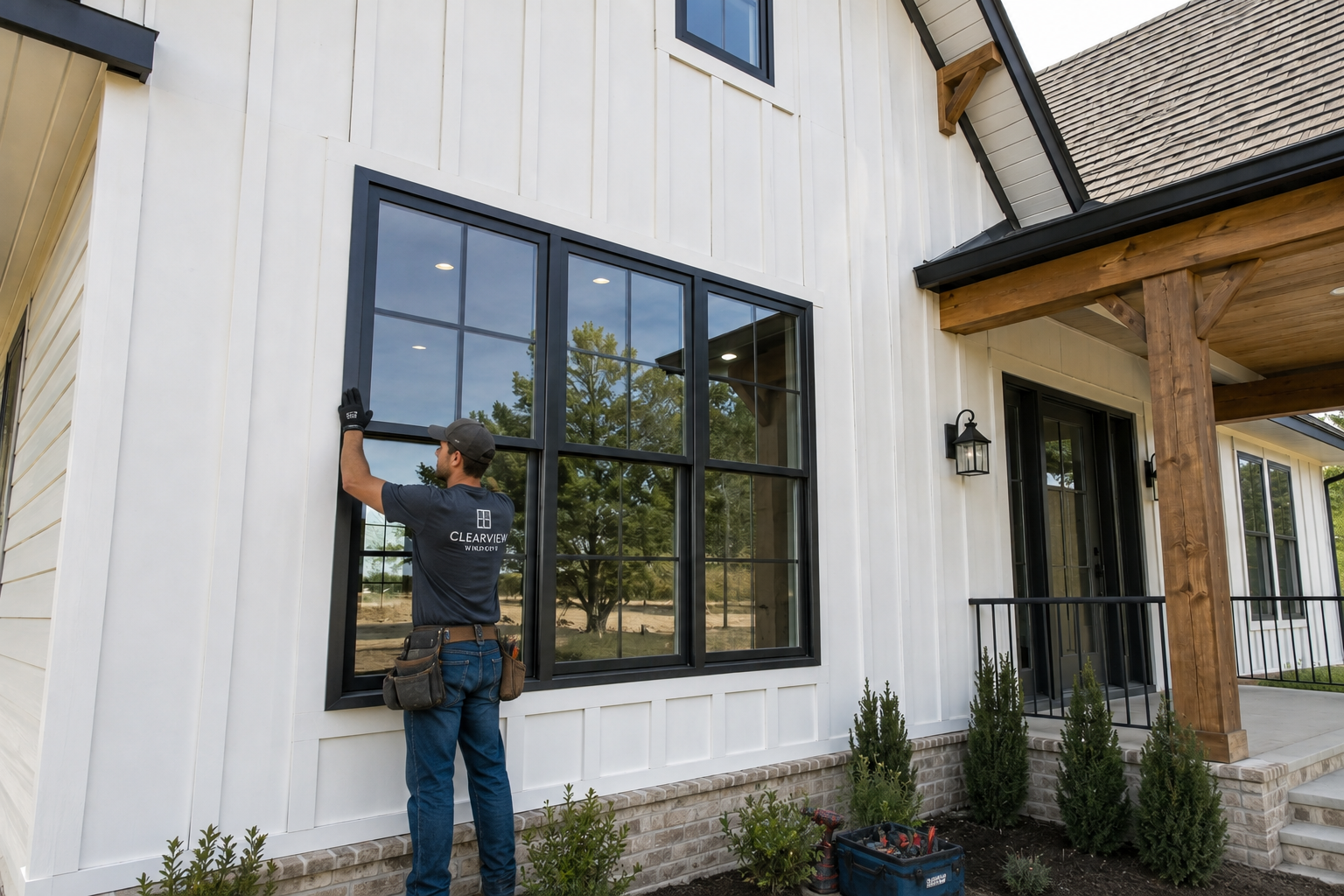
What installation actually covers
Installation is not the same job as replacement
The words get used as if they mean one thing. They do not, and the difference decides what you pay. Installation means a window goes into an opening that is new, or is being changed. The framing is exposed. The siding, brick or stucco gets cut. Replacement means a new unit slides into a frame that already exists and the exterior is left alone.
Installation costs more per opening because a carpenter has to build a structural opening, flash it, and close the wall back up. If your job is a straight swap, read our Denver window replacement page instead. You will get a more useful number.
When you need a true installation
- Basement egress. Finishing a Denver basement into a legal bedroom means cutting a code-compliant escape window and often digging a window well. This is the single most common installation job in the metro.
- Additions and pop-tops. New square footage means new openings.
- Changing the opening. Turning a small kitchen window into a large slider, or dropping a header to add height.
- Rotted or failed framing. When the rough opening itself is gone, there is nothing left for a replacement unit to sit in.
- Wall already open. Any remodel that strips the exterior.
Denver basement egress, in plain numbers. The International Residential Code, which Colorado jurisdictions build on, requires an emergency escape opening in every sleeping room. The net clear opening must be at least 5.7 square feet, reduced to 5.0 square feet for openings at grade level. Minimum clear height is 24 inches. Minimum clear width is 20 inches. The sill can sit no more than 44 inches above the finished floor. Those are the numbers an inspector measures. A contractor who cannot recite them is not the contractor for a basement bedroom.
What drives the price of a Denver installation
| Factor | Why it moves the number |
|---|---|
| Cutting a new opening | Header sizing, structural engineering on load-bearing walls, patching siding or stucco to match. The patch is often the expensive part on a stucco home. |
| Egress well and ladder | Excavation, a steel or composite well, drainage to daylight or a sump, and a fixed ladder when the well is deeper than 44 inches. |
| Foundation cutting | Sawing a concrete or cinder-block foundation wall for a basement egress window. Specialist work, priced separately. |
| Historic district review | In a Denver landmark district, the design of the unit has to be approved before it goes in. Add weeks, not dollars, but the weeks matter. |
| Frame material and glass | Vinyl is the volume choice. Fiberglass holds shape better through Denver's temperature swings. Wood-clad costs most and looks right on an older home. |
| Access | Second and third-storey openings need scaffolding or lifts. A Capitol Hill row house with no side yard costs more than a Green Valley Ranch ranch house. |
The high-altitude detail almost nobody mentions
Denver sits at 5,280 feet. A sealed insulated glass unit built and sealed at sea level arrives here with more pressure inside than outside. The panes bow outward. You can see it as a lens-like distortion in the reflection, and over years that constant stress works the edge seal loose.
Manufacturers handle this two ways. Some fit a small capillary or breather tube that lets the unit equalise during shipping, then crimp it. Others build the unit with an altitude-adjusted gas charge. Either is fine. What is not fine is a stock sea-level unit trucked straight to the Front Range. Ask any installer bidding your job which method their supplier uses. The answer separates people who work here from people who ship here.
How the process runs
- You send one request. Roughly 60 seconds.
- We match you. Up to four licensed installers who cover your ZIP code.
- They measure. A real installation quote needs an on-site measure. Anyone quoting a new opening over the phone is guessing.
- You compare. Look at the line items, not the total. Permit, disposal, interior trim, exterior patch, and warranty terms are where quotes actually differ.
- You choose, or you do not. There is no fee and no obligation.
Read the quote for these five lines
- Who pulls the permit, and whether the fee is included.
- Exterior patch and paint, in writing, matched to your existing finish.
- Interior trim and drywall return. The most common surprise charge.
- Labour warranty length, separate from the manufacturer's glass warranty.
- Haul-away of the old units and debris.
Common questions
Do I need a permit to install new windows in Denver?
Usually yes if the opening changes. Denver and most metro cities require a building permit when a window opening is cut, widened, or made smaller, and when an egress window is added to a basement. Swapping a window for one the same size in the same opening is treated more lightly in some jurisdictions than others. Your contractor pulls the permit, not you. Ask for the permit number in writing before work starts.
How long does a whole-house window installation take?
Two to four days of on-site work for a typical Denver home of ten to twenty openings. The long part is the wait before that. Custom-sized units run four to eight weeks from order to delivery, and longer in spring after a hail season.
Can windows be installed in Denver in winter?
Yes. Installers work through Colorado winters by taking one opening at a time and closing it the same day. Low-temperature sealants and caulks exist for exactly this. Winter is often the cheaper season to book because demand drops after the hail rush.
What is the difference between new-construction and replacement windows?
New-construction units have a nailing fin that fastens to the framing, so they need the siding or stucco opened up. Replacement units drop into the existing frame and leave the exterior alone. New-construction is correct for additions, remodels, and any wall that is already open. Replacement is correct for most straight swaps.
Where we install
Installers in our network cover Denver, Aurora, Lakewood, Arvada and Westminster. Related work: replacement, repair, and cleaning.
Planning a basement bedroom?
Egress windows are the most-failed inspection item in a Denver basement finish. Get quotes from installers who cut them every week.